
Solar panels are a significant investment, and most homeowners and businesses who install them assume that rainfall will keep them clean enough to perform at full capacity. In the South West’s wetter climate, this assumption is largely true for general dust and debris. Where it breaks down is with the soiling that rainfall cannot remove: bird droppings, lichen and algae growth, and the gradual accumulation of bonded grime that develops over time.
At Bay Exterior Cleaning, we clean solar panels across Torbay and Devon. Here is what you need to know about why it matters and when to call us.
How Much Do Dirty Panels Affect Output?
The efficiency impact of soiling on solar panels varies with the type and extent of the contamination. General dust and light soiling in a climate with regular rainfall typically reduces output by two to five percent. This is relatively minor and is largely self-correcting with rainfall.
Heavier soiling, particularly from bird droppings, has a disproportionate impact. A single bird dropping on a panel creates a local shading effect that can reduce the output of the entire panel string, not just the affected cell, due to the way solar panel circuits are configured. In areas with high bird activity, which describes much of the Torbay coastline, this is a genuine and recurring problem.
Lichen and algae growth, which develops on panels in shaded or sheltered positions or on panels that have not been cleaned for several years, is more resistant to removal and requires appropriate treatment rather than simple rinsing. Left untreated, it progressively reduces output and can eventually cause damage to the panel surface.
How Often Should Panels Be Cleaned in Devon?
For properties in Torbay and across Devon, an annual professional clean is the minimum we recommend for maintaining performance. Properties with high bird activity, those in sheltered positions where natural rainfall washoff is limited, or those that show visible lichen or algae growth should be cleaned more frequently, typically every six months.
The best time of year to assess and clean panels is late summer or autumn, when the summer accumulation of bird activity and the season’s soiling can be addressed before the reduced daylight hours of winter when every percent of output matters most.
How Are Solar Panels Cleaned Professionally?
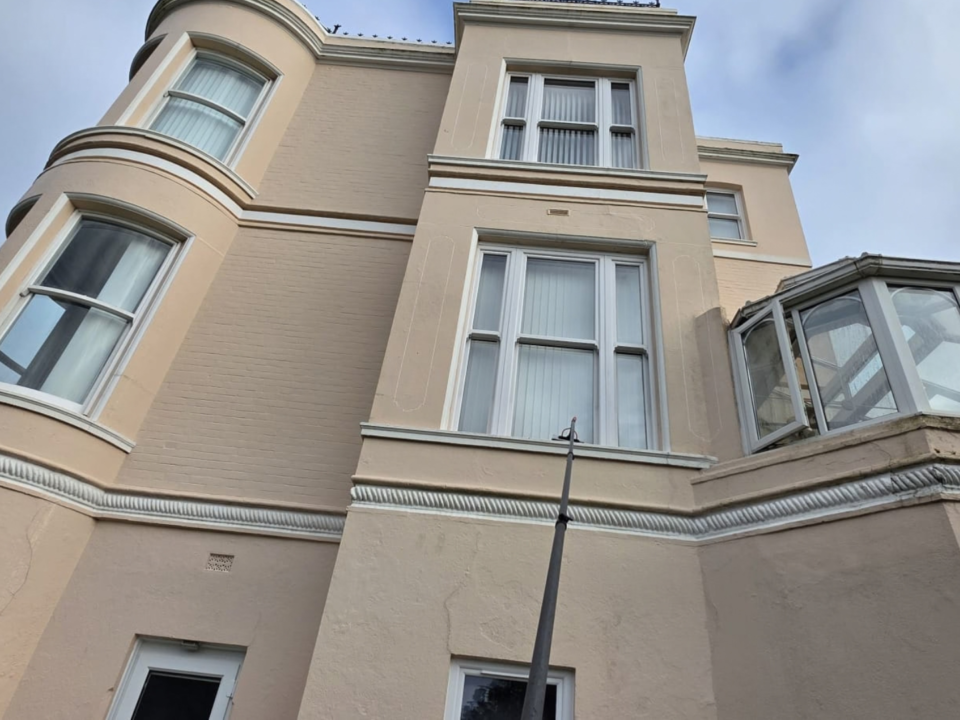
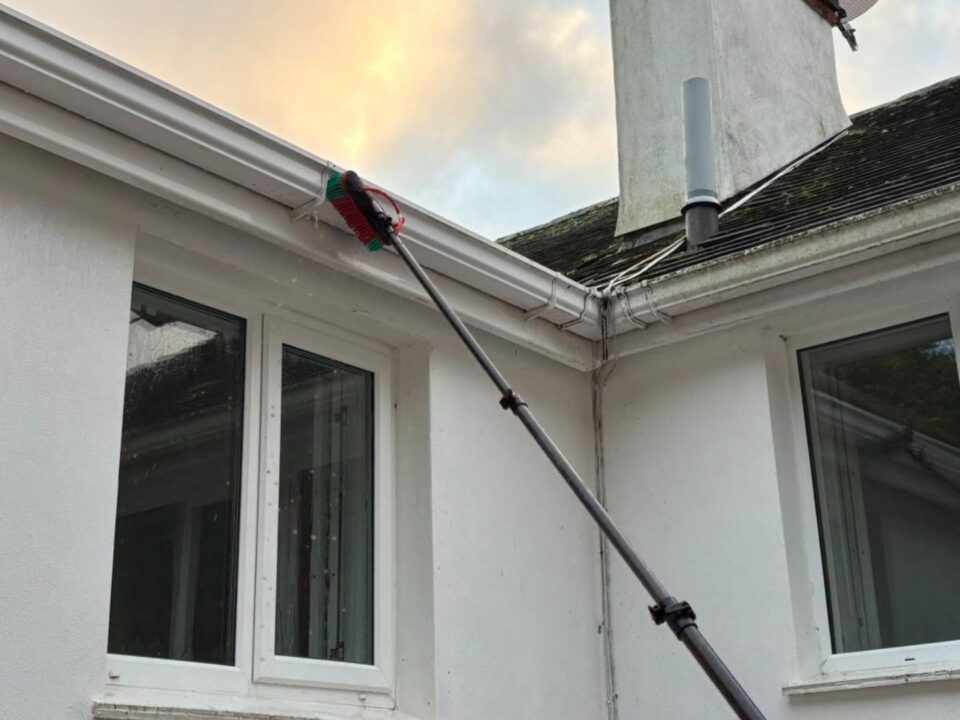
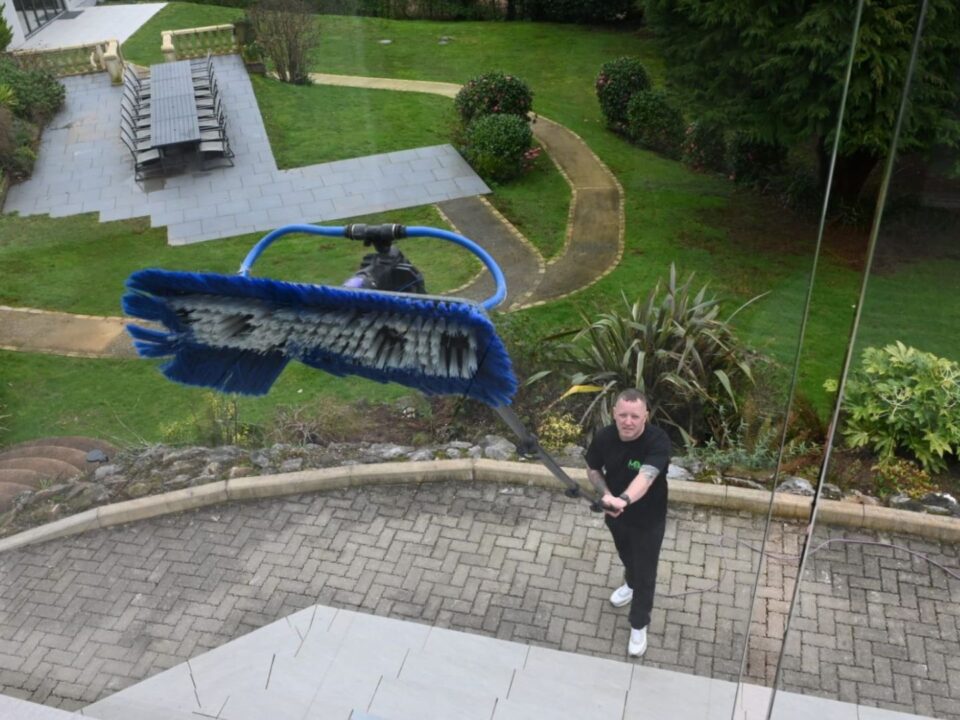
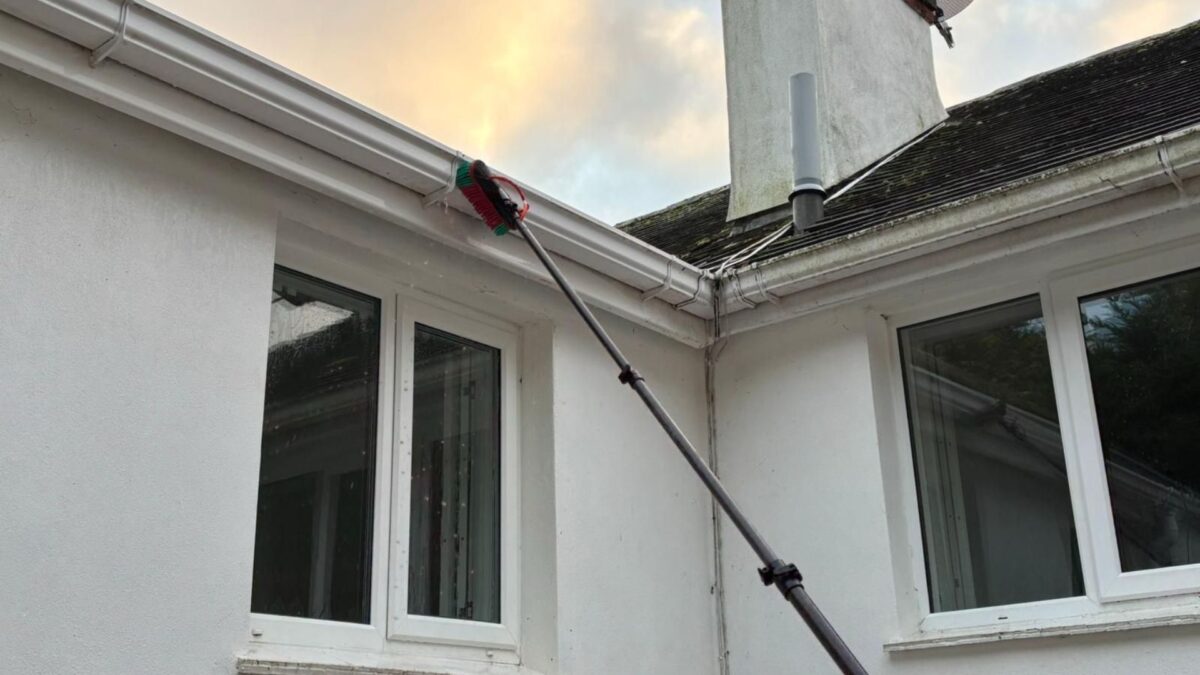
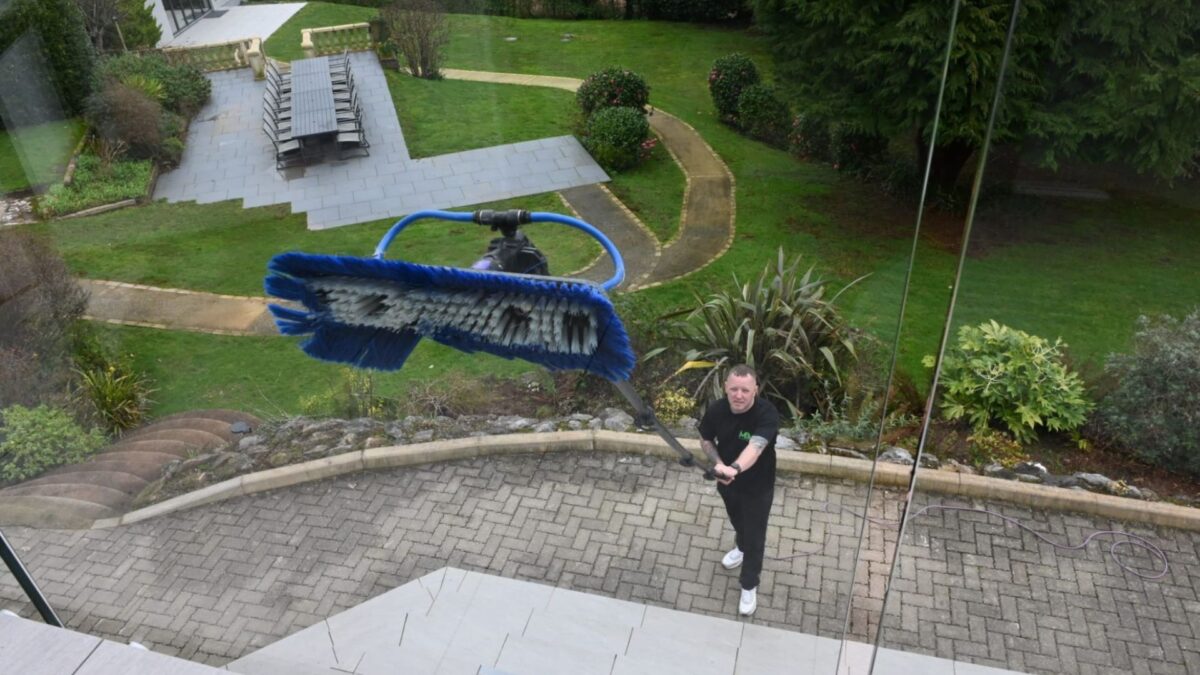
Professional solar panel cleaning uses deionised or purified water with specialist soft brushes and appropriate extension equipment to reach panels safely without the need for roof access in most cases. The use of deionised water prevents the mineral deposits that tap water leaves on drying, which would immediately create a new source of soiling.
Panels with lichen or algae growth require a biocide treatment before or alongside the water clean to address the biological growth at root level rather than simply removing the visible surface layer.
Contact Bay Exterior Cleaning to arrange solar panel cleaning across Torbay and Devon.