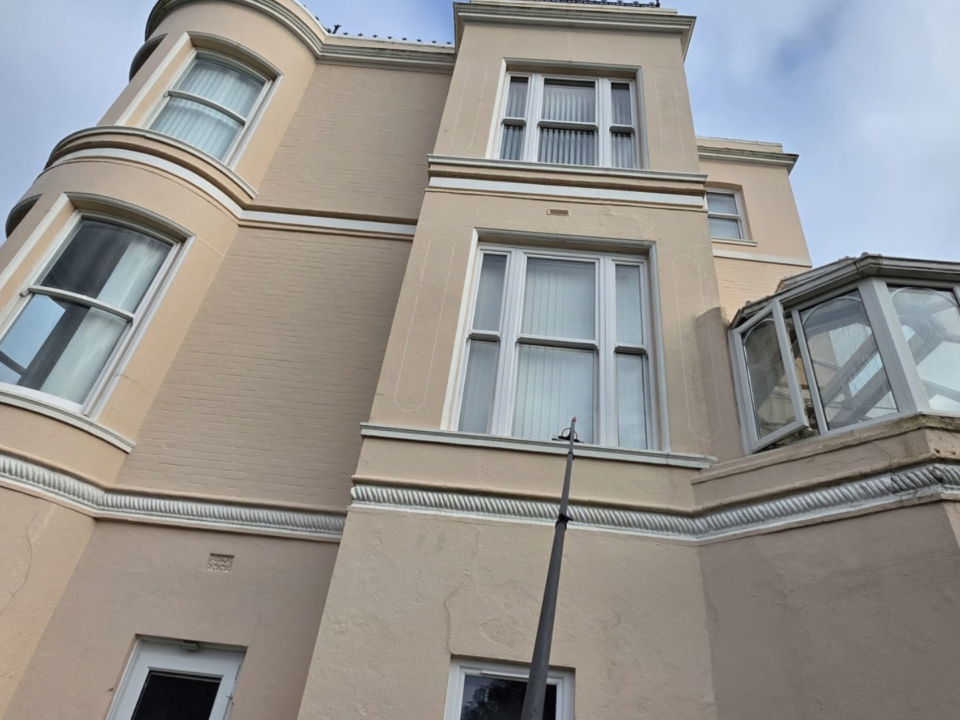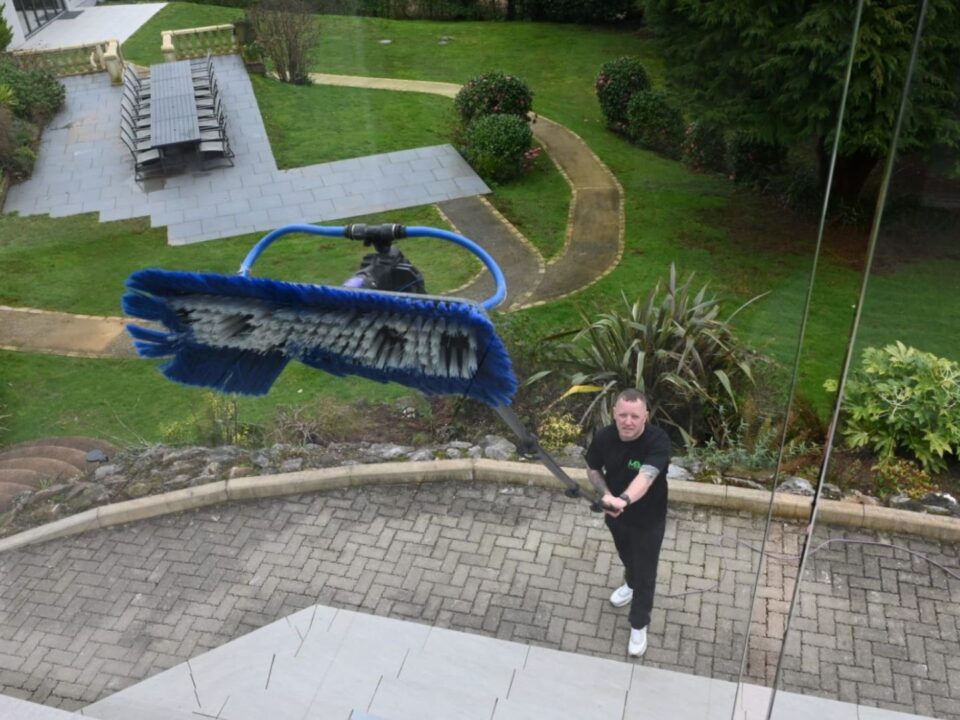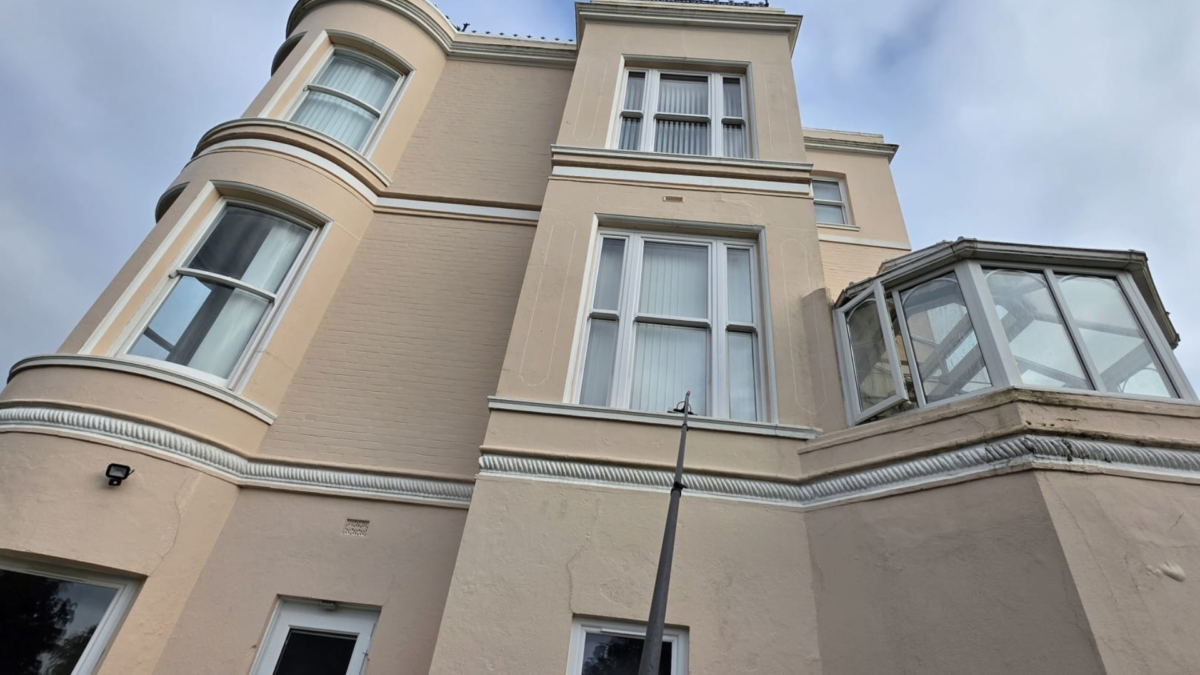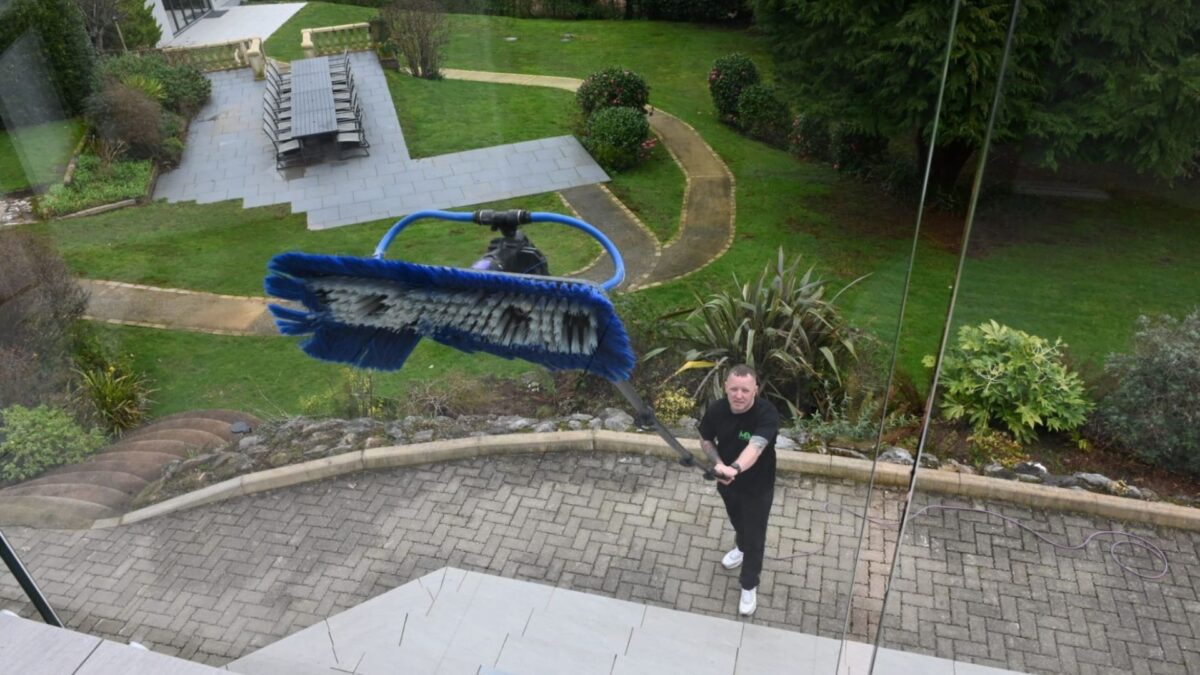
Soft washing is one of those terms that comes up a lot in conversations about exterior cleaning in Torbay, and it is not always clear what it actually involves. If your render has gone green or black, if there is algae on your roof tiles or biological staining on your brickwork, soft washing is almost certainly the right treatment. Bay Exterior Cleaning provides soft washing across Torquay, Paignton, Brixham and the South Hams, and in this guide Mike and Paul explain exactly what it involves and why it produces better results than pressure washing for most exterior surfaces.
What soft washing actually is
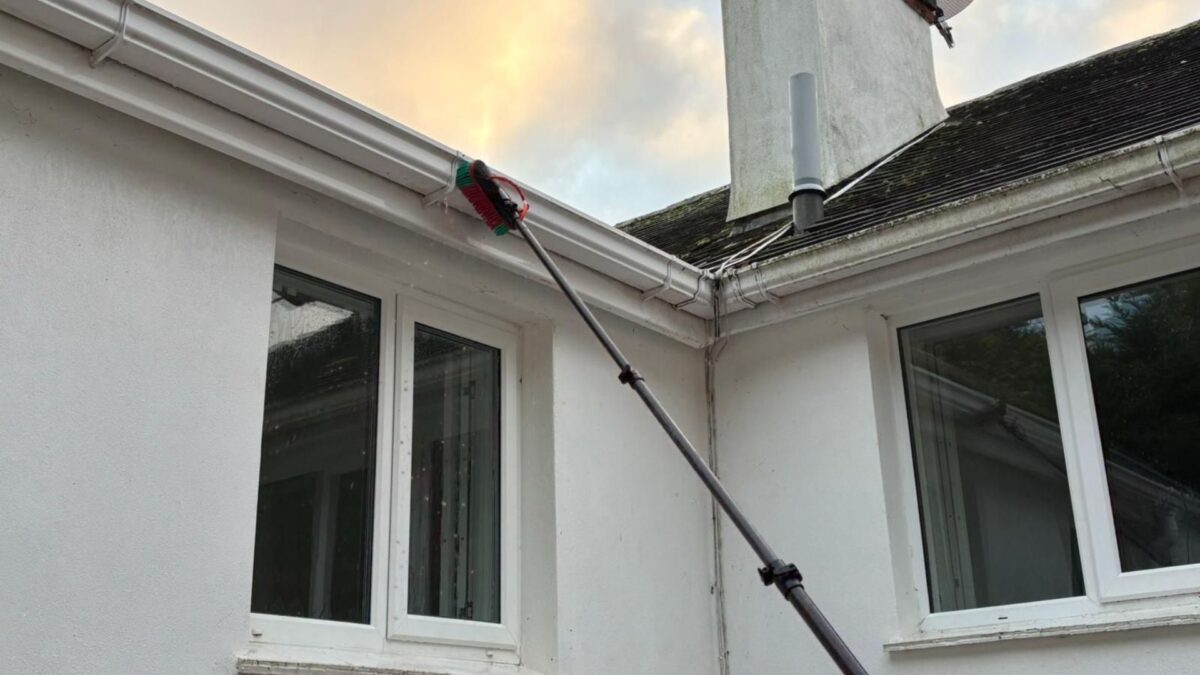
Soft washing is a cleaning method that uses low-pressure water to apply specialist biodegradable cleaning solutions directly to an exterior surface. The pressure used is considerably lower than a standard jet wash. On most surfaces it is not much more than a garden hose. What does the work is not the pressure but the chemistry: the cleaning solutions break down algae, lichen, moss and mildew at root level, killing the biological growth rather than simply removing what is visible on the surface.
After the solution has been applied and given time to work, the surface is rinsed down at low pressure. The biological growth comes away cleanly, including the root systems that anchor it to the render or tile. Because those roots have been treated rather than just scraped off, regrowth takes much longer to re-establish. On most properties in South Devon, a soft wash treatment holds for three to five years.
Why it matters for render in Torbay
Rendered properties on the coast have a particular problem. The combination of salt air from the sea, high moisture levels and the texture of render creates ideal conditions for algae and lichen to take hold. Properties with a south-west facing aspect, which takes the prevailing weather off the sea, tend to develop staining fastest. By the end of a wet winter or a long summer, render that was clean twelve months ago can look significantly worse.
The instinct of most people when they see green or black staining on render is to hire a pressure washer. On a patio or a driveway, that instinct is usually right. On render it is often wrong, and on modern render types it can be actively damaging.
Why pressure washing render is a problem
High-pressure water forced against rendered surfaces can strip surface texture on monocouche and K Rend finishes, erode the colour of through-coloured renders and create hairline cracks that allow water to penetrate. Once moisture gets behind render it causes problems that are considerably more expensive than the original staining. Beyond the physical damage, pressure washing does not treat the biological growth. It removes what is visible on the surface but leaves the spores and root systems intact, which means the staining returns within months.
Mike and Paul see the results of poorly executed pressure washing regularly on properties across Torquay and Paignton. In some cases the damage to the render surface is obvious from the street. In others it only becomes apparent when damp problems start appearing internally. Soft washing at low pressure, with the correct chemistry for the render type, avoids all of that.
What surfaces can be soft washed
Soft washing is appropriate for most exterior surfaces where biological staining is the problem. Rendered walls of all types including K Rend, monocouche, silicone and Parex. Roof tiles including concrete, clay and slate. Brickwork and stone. Fascias and soffits. Garden walls and boundary fencing. Each surface type requires the right solution and the right dwell time, which is why professional application produces consistently better results than DIY treatments.
For surfaces where pressure rather than chemistry is the more appropriate approach, such as block paving, concrete driveways and patios, jet washing is the right tool. Bay Exterior uses both methods and will always advise which is correct for the specific surface before starting work.
Is soft washing safe for my property?
The cleaning solutions used in professional soft washing are biodegradable and specifically formulated for exterior use. When applied correctly they do not harm plants, garden furniture or other surfaces nearby. Bay Exterior takes care to protect planting and drainage when working on properties across Torbay, and will discuss any specific concerns about your garden or landscaping before the work begins.
The low pressure used in soft washing means there is no risk of the physical surface damage associated with pressure washing. For older render, pebbledash or any surface where the integrity of the finish is a concern, soft washing is the safer option by a significant margin.
Frequently asked questions
How long do soft washing results last on a coastal property in Torbay?
On most properties in Torbay and the South Hams, a professional soft wash treatment holds for three to five years. Properties with a direct sea view or a south-west facing aspect that takes the full coastal weather may see regrowth at the shorter end of that range.
Is soft washing safe for K Rend and monocouche render?
Yes. Soft washing at low pressure with appropriate chemistry is safe for all modern render types including K Rend, monocouche, silicone and Parex. It is considerably safer than pressure washing, which can strip surface texture and cause hairline cracking on these finishes.
How long does a soft wash treatment take?
Most residential soft washing jobs in Torbay take between two and five hours depending on the size of the property and the extent of the biological growth. The cleaning solution needs dwell time to work, so the visit is longer than a simple pressure wash but the results last considerably longer.
Get a free instant quote for soft washing in Torbay at bayexteriorcleaning.co.uk/instant-quote