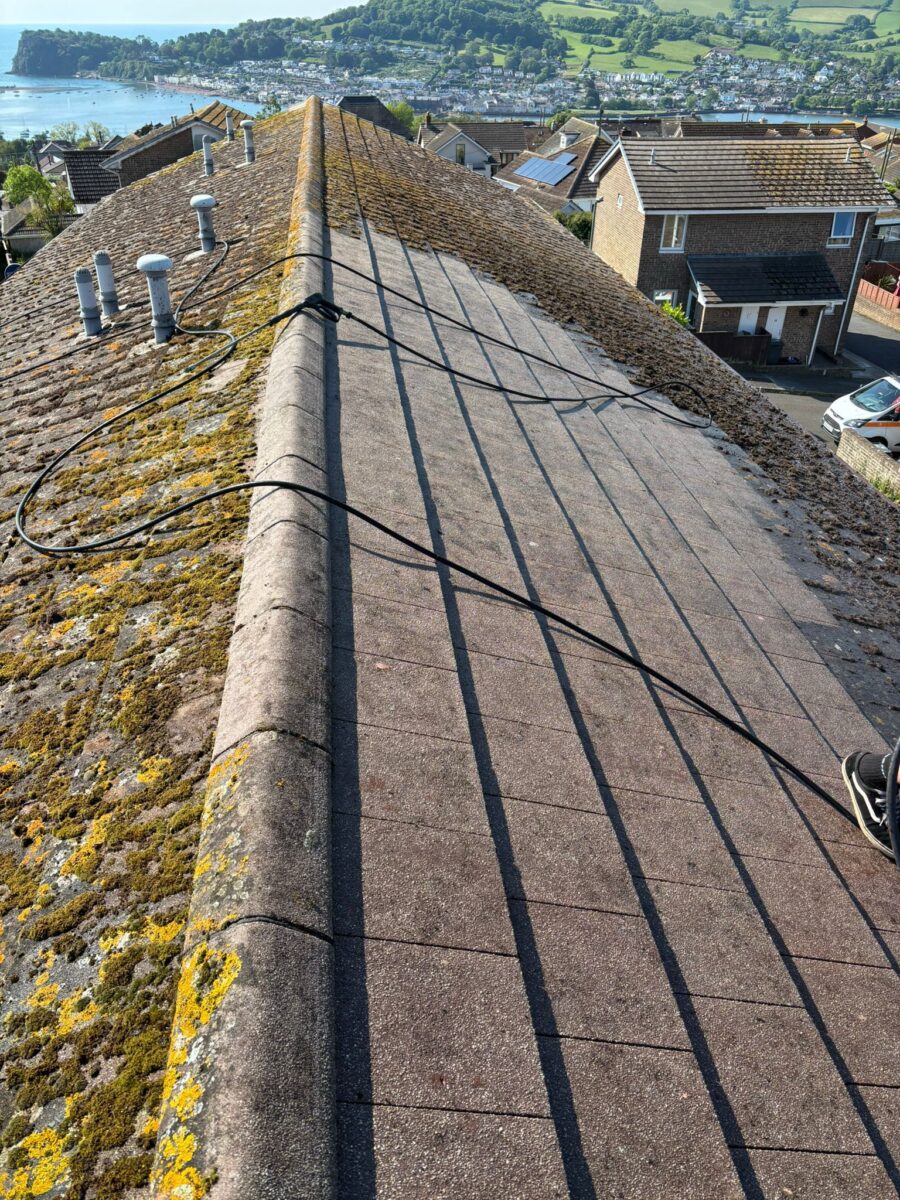
It starts with a faint green tinge along the north-facing slope. Easy to ignore. After all, plenty of roofs in Devon have a bit of moss on them. It’s almost part of the character.
The trouble is, moss isn’t just cosmetic. Left alone, it becomes one of the most quietly damaging things that can happen to a roof — and by the time the damage becomes obvious, the repair bills can be significant.
Why Devon Roofs Are Particularly Vulnerable
Devon’s climate is mild, damp, and often overcast — conditions that moss, lichen, and algae absolutely love. The South West sees some of the highest rainfall levels in England, and the combination of moisture and shade (particularly on north-facing pitches) means moss can establish itself quickly and spread rapidly.
Older properties with porous concrete or clay tiles provide the perfect surface for biological growth to take hold. Once it’s in, it’s difficult to shift without the right equipment and technique.
What Moss Actually Does to Your Roof
Moss retains moisture. That’s the key problem. A roof covered in moss is effectively holding water against its surface continuously — which causes several issues over time:
- Tile degradation — repeated freeze-thaw cycles break down porous tiles from within, accelerating cracking and crumbling
- Lifted edges — as moss thickens, it physically pushes under tile edges and ridge tiles, breaking the seal
- Blocked drainage — moss fragments drop into gutters and downpipes, contributing to blockages and overflow
- Damp penetration — if tiles begin to crack or lift, water can reach the roof membrane or timber below
- Energy loss — damp tiles conduct heat more readily, meaning warmth escapes more easily from the property
None of this happens overnight. But moss that’s been growing unchecked for three or four years can cause damage that would cost thousands of pounds to properly address — far more than the cost of regular cleaning.
What About Lichen?
Lichen is often found alongside moss and is, if anything, harder to remove. It bonds more firmly to the tile surface and can cause surface etching over time. Lichen tends to appear as flat, crusty patches in grey, yellow, or black — and it’s worth treating at the same time as any moss removal.
Should You Just Pressure Wash It?
It’s a tempting thought, and pressure washing is often the first thing people consider. The problem is that high-pressure water can cause as much damage as the moss itself — particularly on older or already-fragile tiles. It strips away protective coatings, drives water into joints, and can dislodge tiles that are already compromised.
Professional roof cleaners use controlled, low-pressure techniques combined with appropriate biocidal treatments that kill the growth at the root and prevent it from returning quickly. It’s a more effective result with far less risk to the roof structure.
How Often Should a Roof Be Cleaned?
In Devon’s climate, most homes benefit from a professional roof clean every three to five years, depending on the property’s surroundings and roof type. North-facing properties and those near trees or in sheltered positions may need attention more frequently.
If you’re looking to sell your property, or if you’ve just had a survey that flagged roof condition, getting a clean done can make a significant difference to both appearance and the surveyor’s assessment.
We Cover Torbay and South Devon
At MD Elite Cleaning, we offer professional roof cleaning across Torquay, Paignton, Brixham, Newton Abbot, Dartmouth and the surrounding areas. We use proven methods that are safe for all standard tile types and effective against moss, algae, and lichen.
If your roof has visible growth — or if you simply can’t remember when it was last cleaned — it’s worth getting a quote. Call us on 01803 640041 or get in touch via our website and we’ll take a look.